In the Suite with Agathe Bokanowski
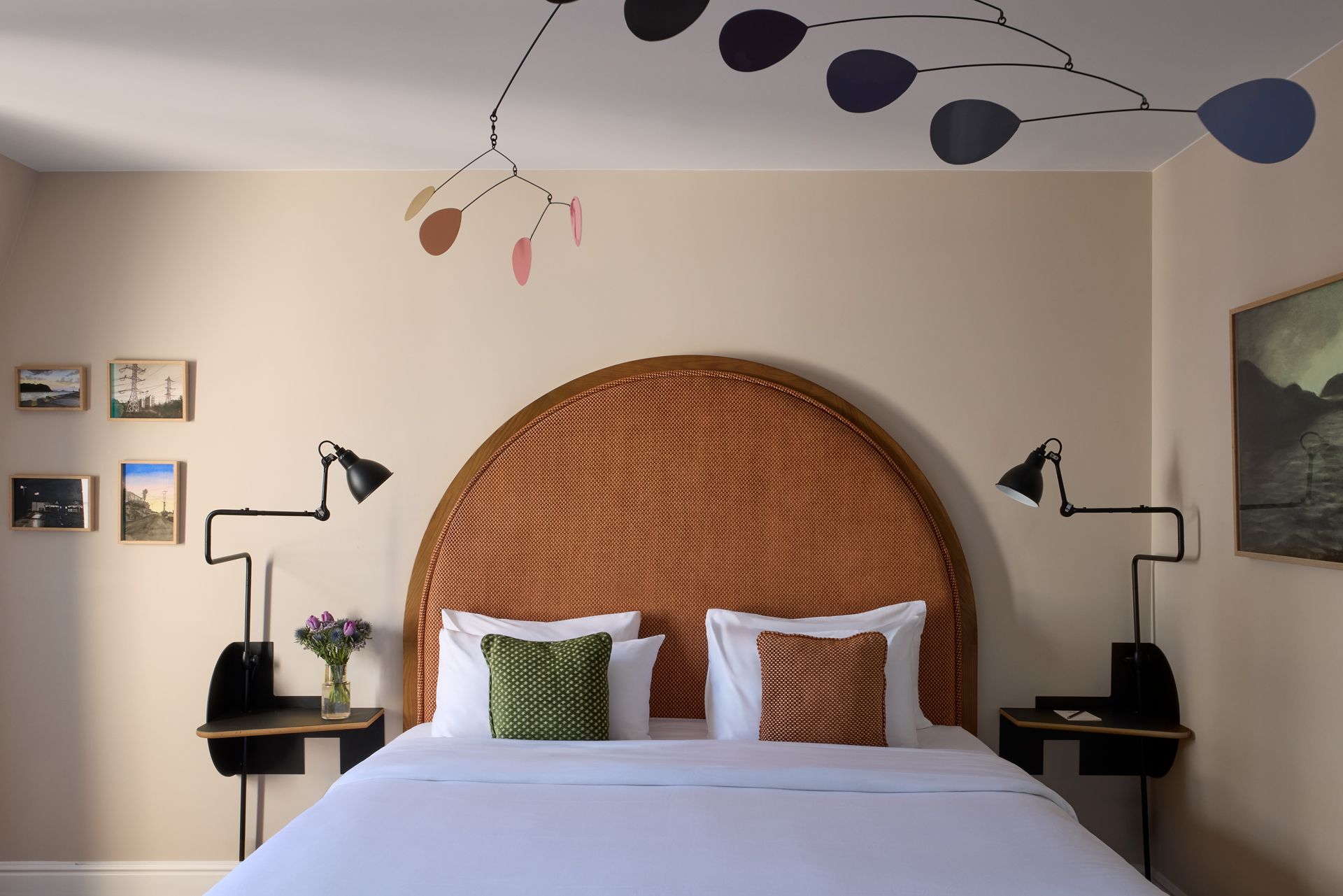
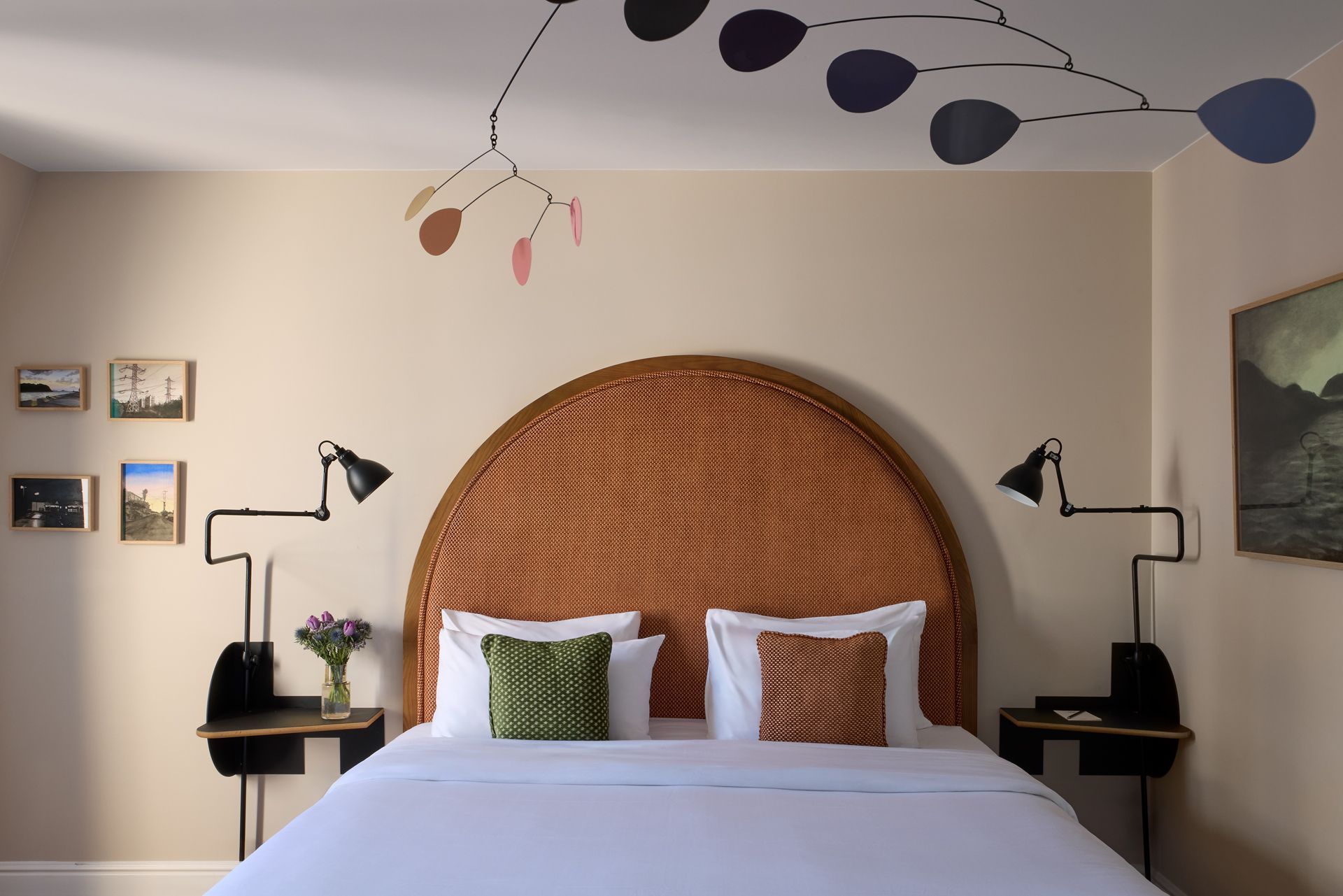
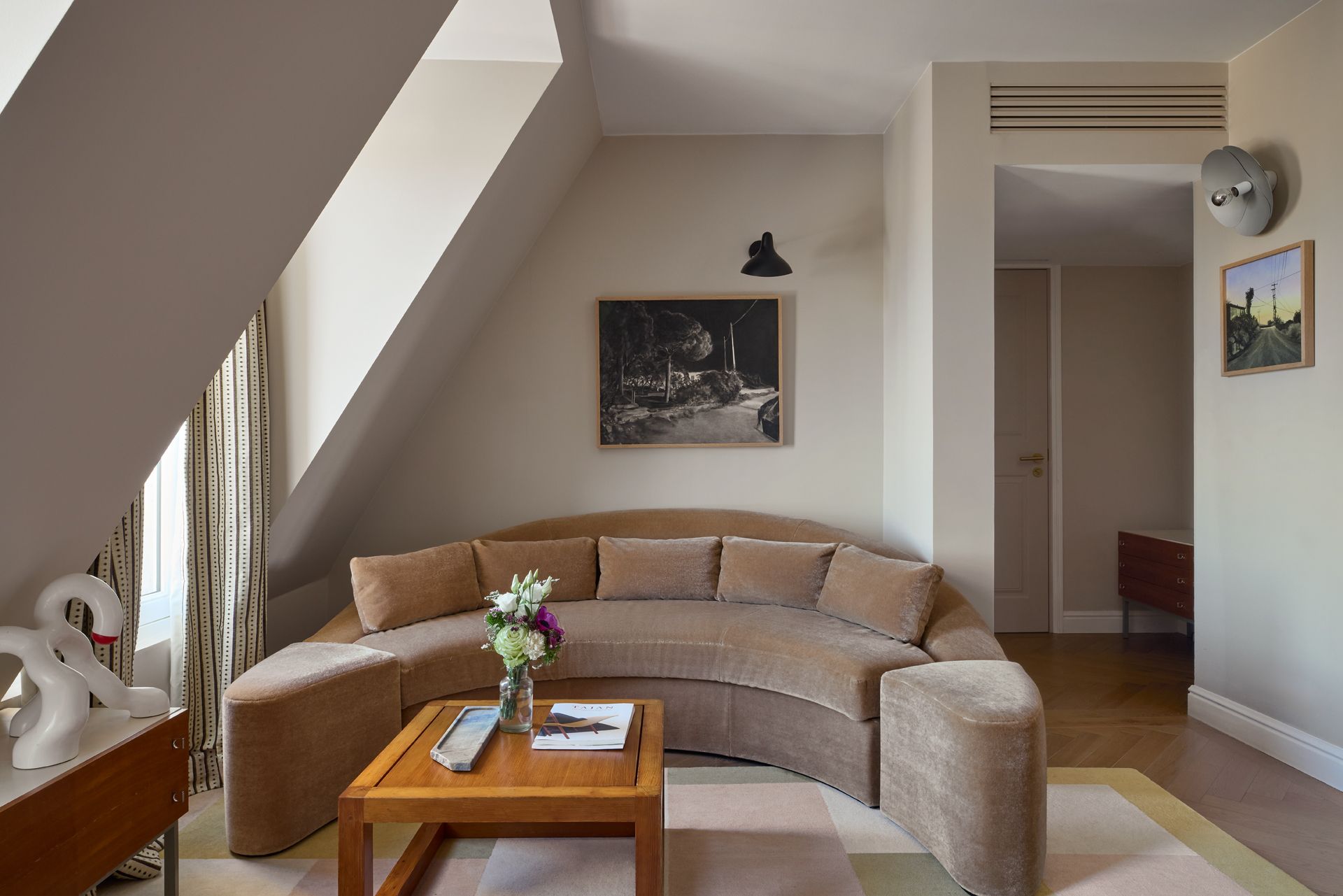
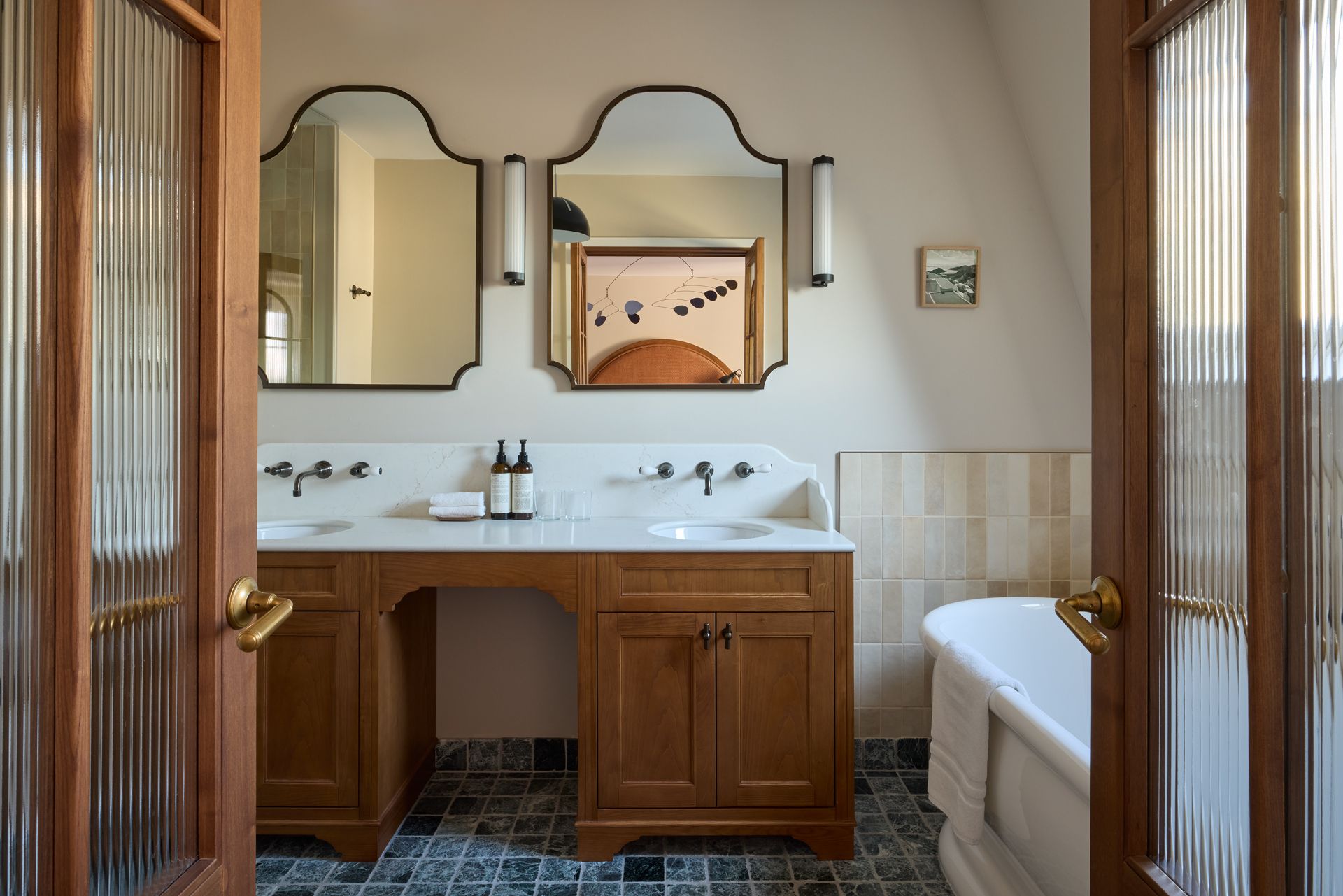
If you’ve checked into La Suite du Collectionneur at Le Grand Hôtel Cayré, you’ll have noticed it straight away: custom artworks sitting alongside antiques and one-off finds. Part gallery, part guestroom, and oui, if something catches your eye, it’s probably for sale. All brought together by renowned art design curator Gilbert Kann.
If you haven’t had the pleasure yet to discover La Suite du Collectionneur, or you have and found yourself wondering about the people behind the pieces, you’re in the right place. In the Suite is where we sit down with the artists themselves. They talk us through their process, their influences, and what sits behind the work you see here.
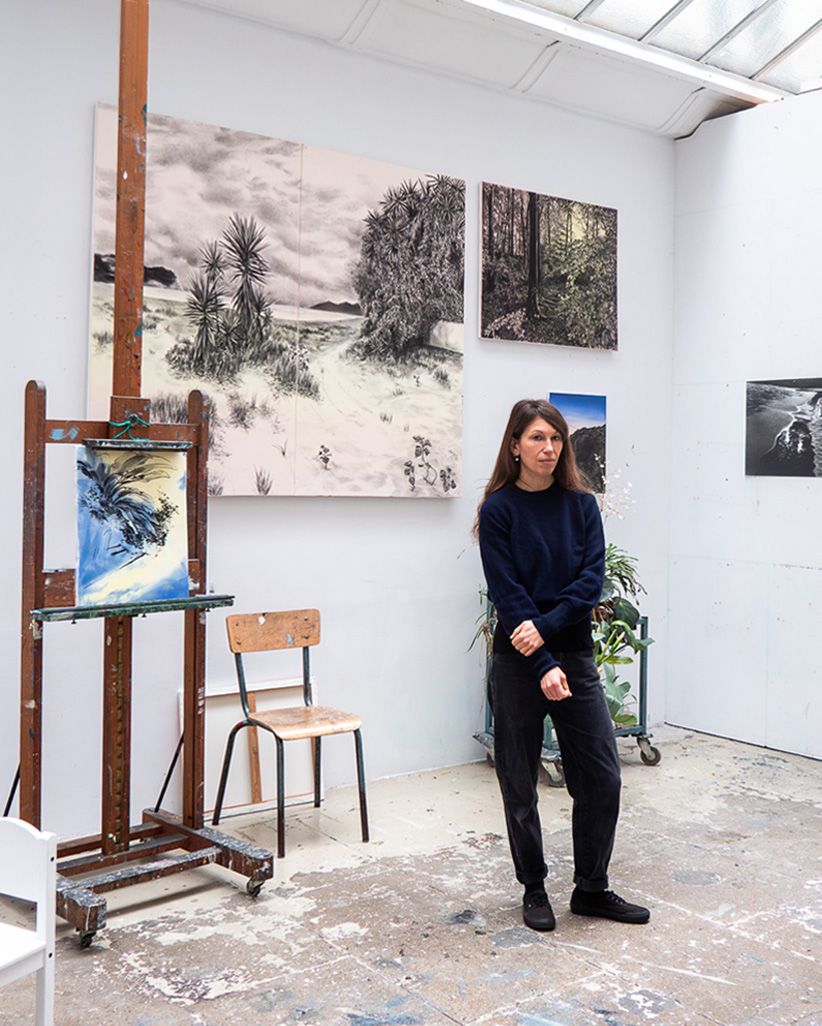
Our first introduction: Agathe Bokanowski, painter and illustrator.
What are you trying to capture in your work?
My work is contemplative and quietly intimate. I paint places, contemporary landscapes, often those I have inhabited, those that have, in some way, shaped me. They read as fragments of life: somewhere between holiday snapshots, dreamlike impressions, and the visual language of 1980s and 90s advertising.
There is a strong presence of memory in your work…
Yes, absolutely. There are often gardens, like the one where I spent almost all my childhood holidays, or forests that keep resurfacing. It feels like a kind of inherited landscape, something alive that continues to evolve. Nothing ever truly disappears; it simply shifts form.
You’ve always drawn and painted, but you also worked with video. Why return to more traditional practices?
Yes, I explored video during my studies. But quite quickly, digital media felt distant to me, too smooth, too cold. I need something more tactile. Something essential was missing: materiality. This need to touch and to make brought me back to gesture, charcoal blackening the paper, water carrying the pigment of watercolour.
Your studio seems filled with a very particular kind of light. How would you describe this space?
A light-filled, almost conservatory-like space, where different species of plants and animals coexist more or less in harmony. Even when Paris is under grey skies, the light here remains crisp, as if suspended in the air. It’s a space that feels alive, that quietly breathes.
What works are you exhibiting with us?
I’m showing several series of works, mainly landscapes: a series of small, colourful drawings made with ink and watercolour, and larger pieces using charcoal, in which one can wander and lose oneself.
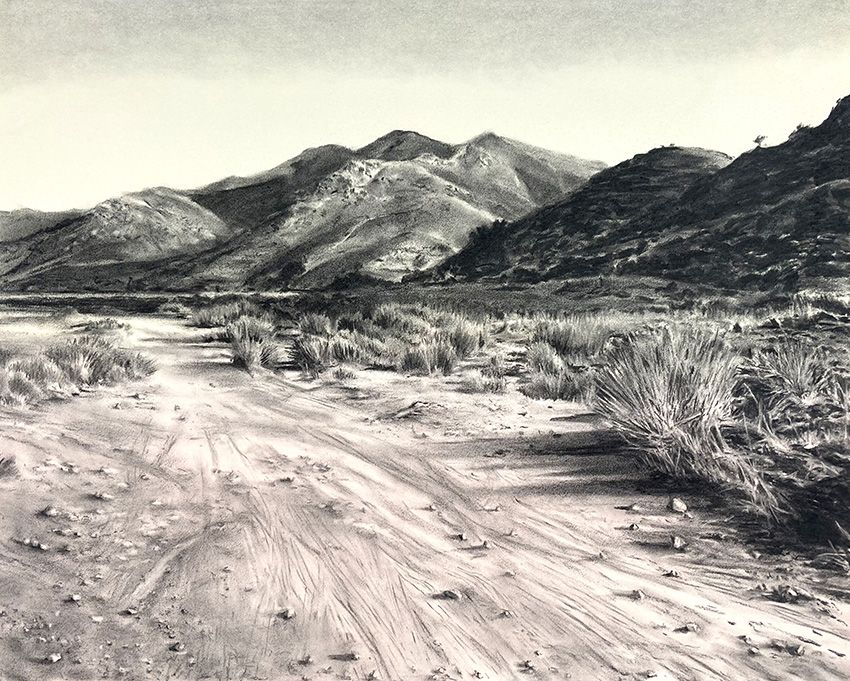
Petra is a landscape of a Greek beach. The watercolour tones evoke Mediterranean light. The beach is located on the island of Patmos, a very particular site: it is said that Saint John wrote the Book of Revelation there. The beach is called “Petra” because of a massive rock that stands there, hollowed with cavities, a hermit is said to have lived in it.
It’s a place layered with stories and traditions, yet these beaches now experience an influx of tourists in the summer, arriving from all over the world, to stay in hotels, houses, or luxury boats. All these readings of the place coexist. I’m often struck by landscapes that retain a historical, even ancient character, while also embodying the most developed aspects of our contemporary societies. These places remain fascinating: immutable, impassive, untouchable. Their permanence, their resilience through time, seem absolutely extraordinary to me.
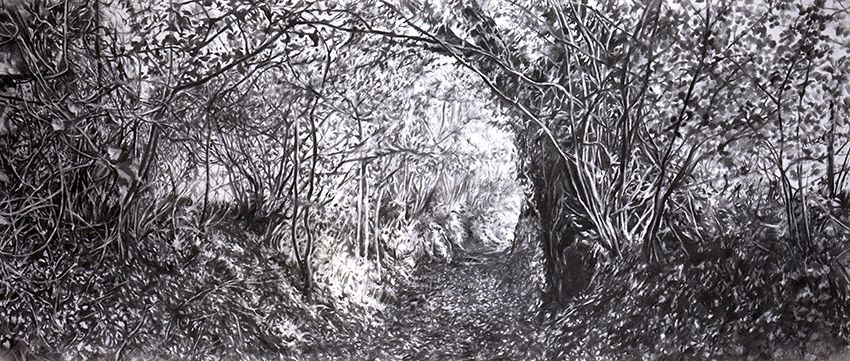
Chemin creux was shown at the Boghossian Foundation in Brussels in 2023, following an artist residency. The Foundation sits on the edge of the Bois de la Cambre, and I wanted to draw on one of Brussels’ oldest traditions: the Meyboom, a Belgian variation of the May Tree [a custom found across Europe and beyond].
Each year, a tree is selected and replanted in the city. During the residency, I installed large forest drawings within the studio space, opening it up and effectively extending the Foundation into the surrounding woods.
In this drawing, we are immersed in a vegetal world: the human presence is almost engulfing, yet it remains protective, even welcoming. Historically, these hollow ways served for centuries as links between villages. Their history is deeply emblematic of the evolution of the French landscape, and the question of hedgerows remains a sensitive issue today.
Your works move between light and darker atmospheres. How do you approach this duality?
It’s true, there are contrasts: bright summers, then denser forests, nighttime landscapes. But I’m not drawn to darkness as such; it’s light that interests me. Shadows are simply part of the landscape, like everything else. There’s a quiet serenity in that, a trust in the idea that nature is still there, stable, grounded, almost immutable.
What are you trying to express through your work?
I’d say it’s a way to follow a thread. What intrigues me are the enduring elements: time, memory, and cycles. It’s a form of art that honours what lasts through everything: people, winters, and our stories.